


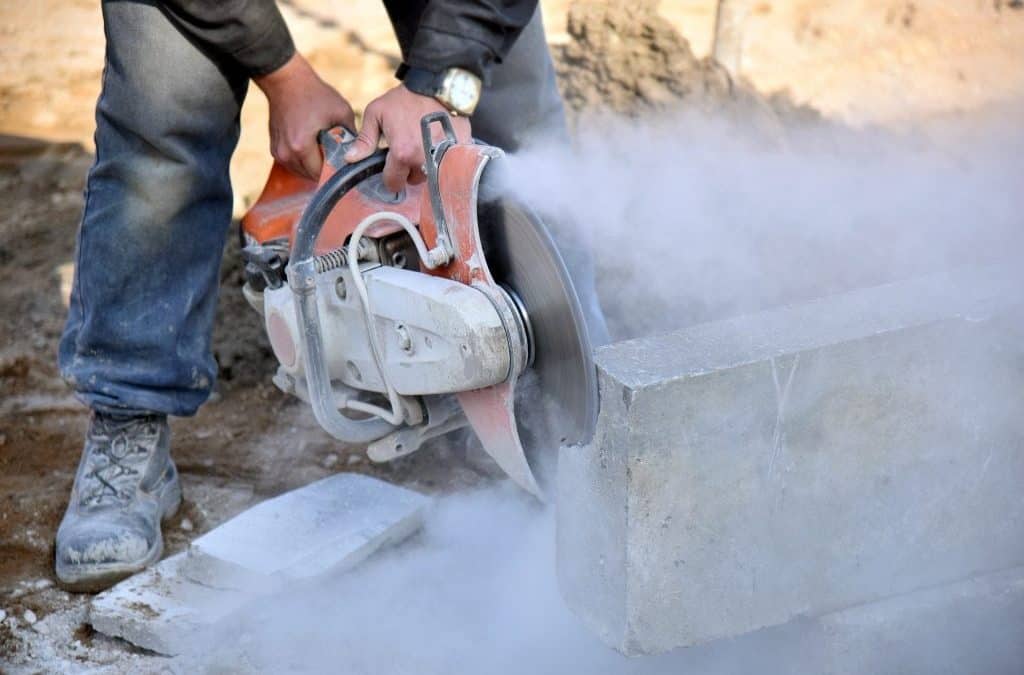
Over the past few years, silicosis has become one of Australia’s most serious emerging workplace health issues. With cases linked to engineered and composite stone industries on the rise, SafeWork NSW has rolled out new crystalline silica rules designed to protect workers from exposure and strengthen employer accountability.
If you’re a business that cuts, drills, grinds or processes materials containing silica, these new requirements likely affect you.
What’s changed?
PCBUs (persons conducting a business or undertaking) that work with crystalline silica substances (CSS) now have stricter duties under NSW WHS laws. These include:
-
Preparing a Silica Risk Control Plan before starting any high-risk processing.
This plan documents the type of work being done, the materials used, control measures in place, and how these will be monitored and reviewed. It must be developed in consultation with workers and made available on-site. -
Mandatory training for workers involved in high-risk tasks.
Any worker who may be exposed to respirable crystalline silica (RCS) must complete accredited or regulator-approved training, and records must be kept for at least five years. -
Health monitoring for at-risk workers.
Health monitoring is no longer optional — it’s a legal requirement when there’s a significant risk of exposure. It must be carried out by a registered medical practitioner experienced in health monitoring.This includes:
-
A baseline assessment before work begins (spirometry, medical history, and possibly a chest X-ray)
-
Ongoing annual medical checks and respiratory testing
-
Additional testing or imaging (such as high-resolution CT scans) for high-risk industries like engineered stone fabrication.
-
-
Notification to SafeWork NSW.
PCBUs must notify SafeWork when carrying out crystalline silica processes and maintain a Silica Worker Register that records all workers potentially exposed to RCS.
(You can find this online through the SafeWork NSW Silica Worker Register Notification page).
What counts as “high-risk”?
Any activity that generates airborne silica dust is considered high-risk. This includes cutting, grinding or polishing stone, concrete or tiles — especially dry cutting methods. Even tasks like clean-up with compressed air can put workers at risk.
If there’s a reasonable chance that airborne concentrations might exceed half the workplace exposure standard (0.05 mg/m³ over 8 hours), a silica risk control plan is required.
What you should do next
If your business works with crystalline silica:
-
Review your current safety systems – make sure risk assessments, air monitoring and control measures (like wet cutting and local exhaust ventilation) are up to date.
-
Develop or update your silica risk control plan before starting any new high-risk tasks.
-
Engage a registered medical practitioner to establish a health monitoring program for your workers.
-
Register your silica workers via SafeWork NSW.
-
Keep clear records of training, exposure monitoring, and health assessments.
The takeaway
The new silica rules aim to prevent more workers from developing silicosis and related diseases. They place a clear responsibility on PCBUs to take proactive steps — not reactive ones.
While these changes may feel like added red tape, they’re actually an opportunity to improve long-term health outcomes and build stronger safety cultures across high-risk industries.
If you’re unsure where to start, feel free to get in touch and we can go through what you need to do!